


What Is Maamoul? The Middle East’s Most Loved Cookie

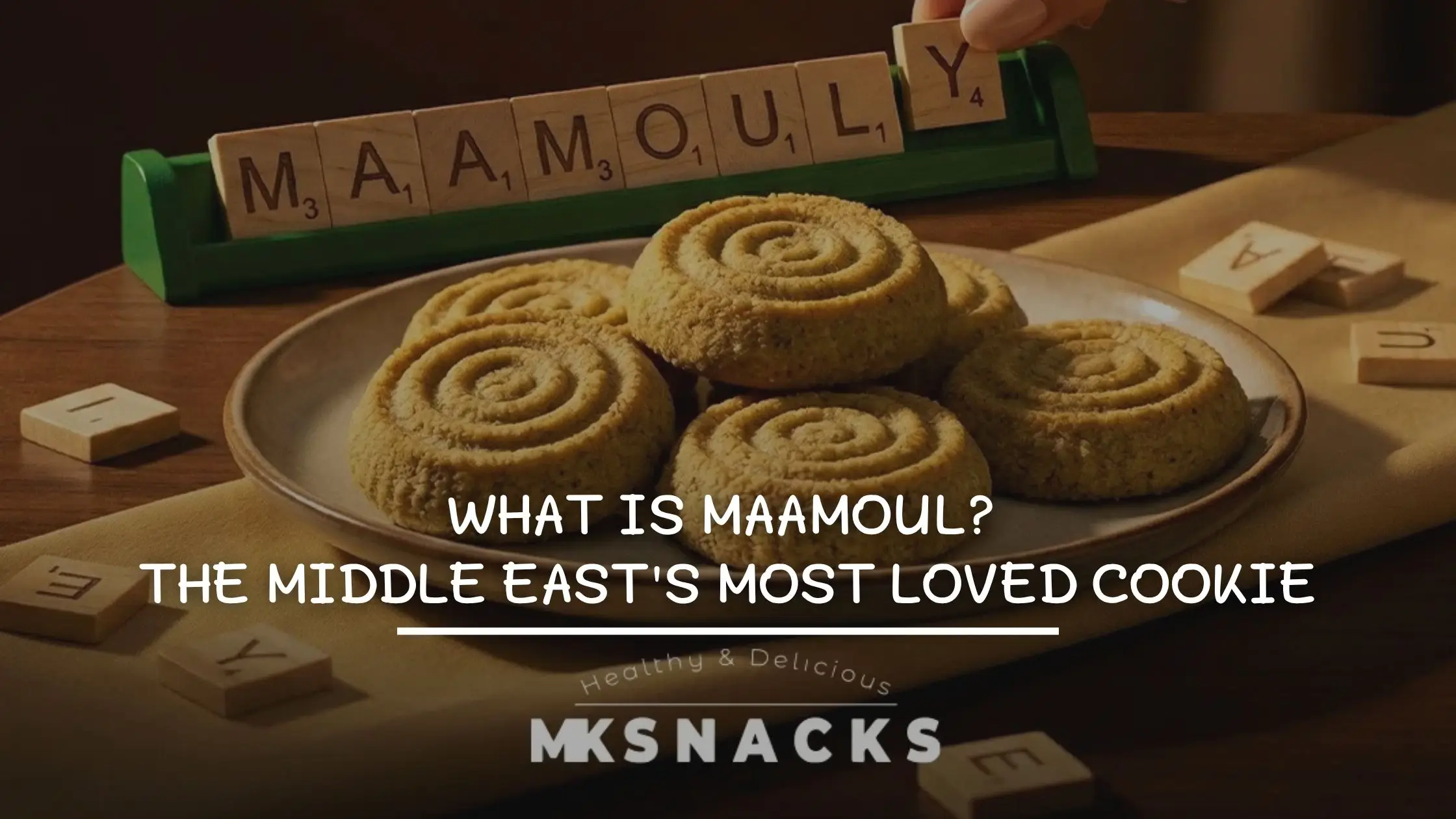
If you have ever sat at an Arabic table during Eid or Ramadan and reached for a small, beautifully shaped cookie that seemed to disappear in one blissful bite, you already know maamoul cookie. You may not have known its name. But the moment that soft, date-filled centre hit your tongue, something ancient and warm reached you through the food.
Maamoul is a traditional Middle Eastern shortbread-style cookie filled with dates, pistachios, or walnuts, pressed into carved wooden moulds and eaten across the Arab world during Eid, Ramadan, Easter, and countless moments in between. It is one of the oldest sweets in Arabic culture, and for good reason. Nothing else quite replaces it.
The problem? Most maamoul is built on refined sugar and butter. It is a celebration sweet, not an everyday one. That is exactly what Maamouly set out to change.
What Does Maamoul Mean in Arabic?
The word maamoul comes from the Arabic root meaning “filled” or “crafted.” It is a name that tells you everything you need to know before your first bite. The cookie is defined entirely by what is inside it. Strip away the dough and what remains is the heart of the thing: sweet, pressed date paste, spiced nuts, or a combination of both.
That simplicity is part of why maamoul has survived for centuries.
The Ancient History Behind Maamoul Cookies
Maamoul is not a modern invention. Historians trace date-filled pastries back to ancient Egypt, where similar sweet cookies were depicted in temple carvings and offered during celebrations. The tradition spread across the Levant and the Gulf over generations, taking on regional variations in dough texture, filling, mould design, and spicing as it moved from Egypt to Palestine to Syria to Lebanon to the Arabian Peninsula.
In the UAE and across the Gulf, maamoul became deeply embedded in the culture of hospitality. You do not just eat maamoul. You offer it. You receive it. You make a large batch with your mother or grandmother the week before Eid, pack it in boxes and tins, and hand it out to every person who walks through your door.
At Maamouly, that same spirit sits at the heart of every cookie. As the brand puts it, the goal is to blend a centuries-old Arabic recipe with modern nutritional values, because real food tastes better. The tradition is untouched. The ingredients have simply been made cleaner.
What Is Maamoul Filled With?
Traditional maamoul comes in three filling variations, and in many households the shape of the cookie tells you what is inside before you even bite into it.
| Filling | Flavour Profile | Common In | Refined Sugar Added? |
| Date paste | Rich, caramel-sweet, earthy | Gulf, Levant, Egypt | Yes, in most commercial versions |
| Pistachio | Nutty, lightly sweet | Lebanon, Syria | Yes, usually mixed with sugar syrup |
| Walnut | Earthy, slightly bitter | Palestine, Jordan | Yes, usually mixed with sugar |
| Omani dates (Maamouly) | Naturally sweet, clean | UAE | No. Zero refined sugar. |
Dates are by far the most common and beloved filling across the Gulf. There is a reason for that. A ripe, properly dried date is already one of the sweetest things nature produces. It needs nothing added to it.
Maamouly uses Omani dates in every single cookie. No refined sugar. No additives. Just the natural sweetness of the date itself, pressed into a perfectly crafted shell. Handcrafted with Omani dates, zero refined sugar, zero compromise.
When Do People Eat Maamoul?
The traditional answer is Eid al-Fitr, the three-day celebration that marks the end of Ramadan’s month of fasting. In the days leading up to Eid, kitchens across the Arab world fill with the smell of baking maamoul. Families make dozens, sometimes hundreds of pieces to share with neighbours, guests, and family members visiting during the holiday.
For Arab Christians, maamoul also appears at Easter, serving the same role: a sweet, communal treat that marks the end of a period of fasting.
But in the UAE, maamoul is not a once-a-year thing. It is served with Arabic coffee during guest visits, offered on a plate with dates at meetings, and kept in kitchen cupboards as a general-purpose snack. It is part of daily hospitality culture.
The issue is that conventional maamoul, eaten this way throughout the year, adds up quickly in refined sugar and calories. That is the gap Maamouly was born to fill. Because Maamouly maamoul is only 130 calories per piece and made with zero refined sugar, it fits naturally into everyday life without guilt. Not just Eid. Every day.
Is Maamoul Actually Healthy?
This is the question most people never think to ask, because maamoul has always been framed as a holiday indulgence. It is not something you audit for nutrition. You just enjoy it.
But when Maamouly’s founder sat down with this question, the answer from every product on the market was disappointing. The refined sugar content was high, the ingredient lists were long, and there was no version that felt genuinely clean.
So a new recipe was created from scratch: 100% healthy, 100% vegan, and only 130 calories per piece, without sacrificing any of the taste that made maamoul worth eating in the first place.
The result is a cookie that Yara Alhasibi, a dietician, says she will recommend to her clients. Haifa Ouertani, a fitness trainer, called it the best maamoul she has ever had and noted it is healthy. Andrea Villa, a yoga teacher, said the taste is incredible.
Here is what makes Maamouly maamoul different from conventional versions:
- Zero refined sugar — naturally sweetened only with Omani dates
- 100% vegan — no dairy, no eggs, no animal ingredients
- Zero additives — nothing hidden in the ingredient list
- 130 calories per piece — designed to fit into a balanced lifestyle
- Recommended by a UAE-based dietician
Healthy does not have to mean boring. That is not a marketing line at Maamouly. It is the starting point for every cookie they make.
Is Maamoul Vegan?
Traditional maamoul is not vegan. The dough in most classic recipes is made with butter or ghee, which means anyone following a plant-based diet has historically had to skip it.
Maamouly maamoul is 100% vegan.
Every piece is made with clean, plant-based ingredients. No dairy. No eggs. No ghee. Just the real, natural flavour of Omani dates in a vegan shell, crafted to honour the tradition without the animal products.
For the growing community of vegan and plant-based eaters across the UAE, this is not a small thing. Arabic sweets have historically been almost entirely off the table. Maamouly puts them back on it.
Try Maamouly — Healthy Maamoul Cookies, Made in the UAE
MK Snacks, the company behind Maamouly, was founded by someone who loved maamoul deeply but could not find a version that matched how they wanted to eat. Rather than settle, they created one. That personal story, the refusal to compromise between tradition and health, is in every cookie.
If you have never tried healthy maamoul, the easiest way to start is with a single piece. One bite is genuinely all it takes.
Maamouly is available on نون الإمارات in three options:
- معمولي قطعة واحدة — 6 AED — the perfect first taste
- 12-Piece Box, 420g — 60 AED — the everyday essential, bestseller
- Ramadan Gift Box, 35 pieces, 1kg — 100 AED — crafted for the most generous season
Read the founder’s story to understand where Maamouly came from. Or visit the mission page to see what every cookie is built around.
Then order one. The tradition has been waiting for you.
Frequently Asked Questions About Maamoul Cookies
Is maamoul vegan?
Traditional maamoul is not vegan because it contains butter or ghee in the dough. Maamouly maamoul is 100% vegan, made entirely from plant-based ingredients and naturally sweetened with Omani dates.
How many calories are in maamoul?
Traditional maamoul can range from 150 to over 200 calories per piece depending on butter and sugar content. Maamouly maamoul is only 130 calories per piece, with zero refined sugar and zero additives.
When do people eat maamoul?
Maamoul is traditionally eaten during Eid al-Fitr at the end of Ramadan and during Easter for Arab Christians. In the UAE and Gulf it is also served year-round with Arabic coffee during guest visits. Because Maamouly maamoul is only 130 calories and free from refined sugar, it works just as well as an everyday snack.
Where can I buy healthy maamoul in the UAE?
Maamouly, the UAE’s healthy vegan sugar-free maamoul, is available on Noon UAE. You can choose a single piece at 6 AED, a 12-piece box at 60 AED, or the Ramadan Gift Box with 35 pieces at 100 AED.
What does maamoul mean in Arabic?
The word maamoul comes from an Arabic root meaning “filled” or “crafted.” The name reflects the defining characteristic of the cookie: it is always filled with something sweet, traditionally date paste, pistachios, or walnuts.